Reviewing the Bother of the Birthday Girl Design
As a designer who spends more time staring at stitch maps than actual fabric, I have learned that not every cute graphic translates well to thread. We often see digital assets labeled as Print Templates or general Graphics, but when you are running a craft business or fulfilling custom orders for an Etsy shop, the distinction matters. Today, I am looking closely at the Bother of the Birthday Girl T-Shirt design. While the title suggests apparel, my interest lies in how this asset performs as a machine embroidery design for real-world projects.
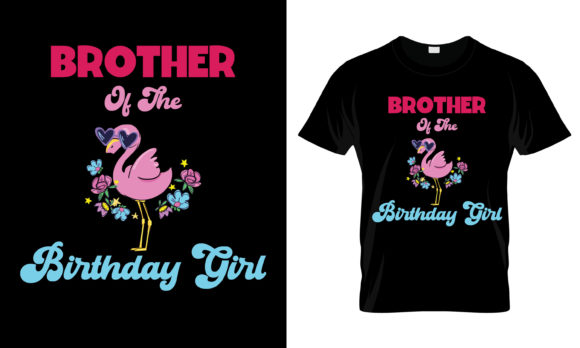
The first impression of this piece is undeniably cheerful. It captures that specific, playful energy required for family celebration gear. The theme revolves around a flamingo, which is a perennial favorite in the boutique and handmade product world. However, visual appeal on a screen does not always guarantee stitching success. When I evaluate a new embroidery file, I am not just looking at the colors; I am looking at the structural integrity of the shapes. Does the design rely too heavily on tiny details that might get lost in the pile of a towel? Is the layout balanced enough to sit comfortably on a curved surface like a cap?
From Digital Asset to Stitched Reality
The product description notes that you will receive SVG, EPS, and PNG files. This is a crucial detail for us as creators. If you are primarily a digital product seller or someone who creates printable mockups, these formats are perfect. You can easily scale the vector files for large format printing or use the high-resolution PNG for social media previews. However, if your goal is to create a physical embroidered patch or a custom sweatshirt, you need to be aware of what these files are not. They are not native machine embroidery formats like DST or PES.
This means that before you hoop up your fabric, you must digitize these graphics or convert them using reliable software. For an experienced designer, this is an opportunity. You can control the stitch density, choose between satin stitch and fill stitch, and ensure the running stitch outlines are sharp. For a hobbyist, this is a step that requires caution. A flamingo design often features long, slender legs and a curved neck. In embroidery, these thin lines are prone to breaking or looking sparse if the stitch count is too low. Conversely, if you pack too many stitches into the body of the bird, you risk puckering the fabric, especially on stretchy materials like t-shirt jersey.
Real-World Application Scenarios
Let’s imagine a realistic scenario. A customer comes to your small shop requesting a personalized gift for her daughter’s birthday party. She wants matching outfits for the siblings. The "Bother" concept is humorous and trendy, fitting perfectly into the current market for sibling rivalry themes. Here is how I would approach this project using this design asset.
For a tote bag design, the flat canvas surface is forgiving. You can use a dense fill stitch for the flamingo body without worrying about fabric distortion. The bold shapes will stand out against the textured weave of the canvas. However, if you are attempting baby embroidery on a onesie, the approach changes entirely. Babies move, and their clothes go through frequent washing. You need to ensure that any lettering associated with the design is large enough to remain legible after multiple wash cycles. Tiny, intricate details in the flamingo’s feathers might merge into a solid blob if the thread colors are too similar or if the stabilizer is not adequate.
Another popular application is holiday embroidery or special event merchandise. Flamingos are often associated with summer birthdays, but with the right thread colors, this design could work for tropical-themed wedding gifts or even vibrant nursery decor. If you are creating an embroidered patch, the backing material provides stability, allowing you to push the design details further. You can use satin stitch borders to define the shape clearly, making it pop against a denim jacket or a backpack.
Navigating Technical Challenges
There are specific situations where you should use this design carefully. First, consider the hoop size. If you are working with a small 4x4 inch hoop, you may need to simplify the design. Complex layouts do not shrink well. Second, think about fabric texture. On a fluffy towel, fine details disappear. On dark fabric, you must ensure high contrast in your thread colors. A pink flamingo on a navy blue shirt works well, but a pastel pink on a light gray heather might look washed out.
Layered garments present another challenge. If you are embroidering on a hooded sweatshirt, the thickness of the fabric stack can cause needle deflection. This leads to uneven stitches or thread breaks. Always test the design on scrap fabric first. This is non-negotiable for professional results. Check the tension, inspect the back of the stitching for excessive pull, and verify that the stabilizer is doing its job. For stretchy fabrics, a cut-away stabilizer is usually safer than tear-away, as it provides ongoing support to the stitches.
Enhancing Brand Value and Customer Trust
Why does this matter for your craft business? Because consistency builds trust. When a customer buys a handmade product from your Etsy listing, they expect a certain level of professionalism. A poorly digitized design with loose threads or puckered fabric reflects badly on your brand. On the other hand, a crisp, well-executed embroidery project enhances the perceived value of the item. It turns a simple t-shirt into a keepsake.
Using versatile design assets like this allows you to expand your product line without starting from scratch. You can adapt the flamingo motif for different seasons by changing thread colors. You can pair it with different fonts to create unique variations for each client. This flexibility is key for commercial embroidery operations that need to turn around orders quickly while maintaining quality.
Final Designer Notes
Before you commit to a large production run or list this as a finished product, take a moment to review the technical specifics. Since the provided files are SVG, EPS, and PNG, confirm your licensing rights. Can you use the converted embroidery files for commercial sales? Most designers allow this, but it is always best to check. Also, remember that color separation is your responsibility. The PNG preview gives you an idea, but you must select thread colors that match your brand aesthetic and the garment color.
In summary, the Bother of the Birthday Girl T-Shirt graphic is a strong candidate for various embroidery projects, provided you handle the digitization and material selection with care. It offers a fun, recognizable theme that resonates with buyers looking for personalized gifts. By paying attention to stitch density, fabric choice, and hoop constraints, you can transform this digital asset into a high-quality physical product that delights customers and strengthens your reputation as a skilled maker.