Pardon Me Dad: A Designer’s Take on Humorous Embroidery
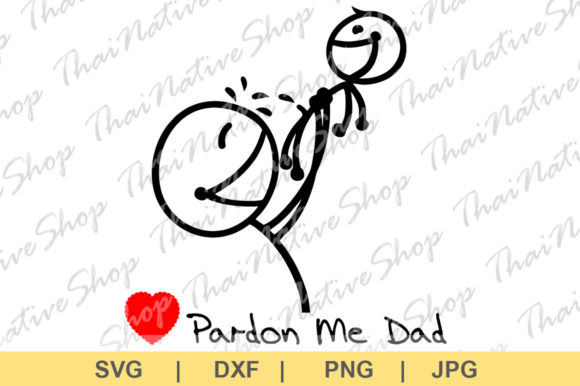
As an embroidery designer who has spent countless hours digitizing and testing files for real-world application, I have learned that humor is one of the hardest emotions to capture in thread. It requires a delicate balance between clarity and charm. When I first loaded the Pardon Me Dad design into my software, I was immediately struck by its candid, freehand aesthetic. This is not a rigid, geometric illustration; it is a moment frozen in time, rendered with the loose, expressive lines of a sketch. The scene depicts a father holding his baby boy, only to be surprised by an accidental, humorous mishap. Yet, the father’s expression remains one of pure love, devoid of anger. For those of us in the craft business, this emotional nuance is gold.
First Impressions and Visual Personality
The immediate mood of this piece is warm, relatable, and genuinely funny. In the world of Illustrations and Graphics, line drawings can sometimes feel cold or sterile if not executed with care. However, this design feels organic. The layout is balanced, focusing on the interaction between the two figures rather than excessive background clutter. This simplicity is crucial for embroidery. Complex backgrounds often turn into muddy patches of thread when stitched out, but here, the focus remains sharply on the characters.
From a technical standpoint, the visual personality suggests a reliance on clean running stitches and potentially light fill stitches to define shapes without overwhelming the fabric. The "freehand" style implies that perfection is not the goal; character is. This makes it an ideal candidate for projects where a handmade, artisanal look is preferred over industrial precision.
Real-World Application: The Custom Sweatshirt Test
To truly evaluate a design, you must imagine it on a finished product. I recently considered this design for a custom apparel order—a high-quality cotton sweatshirt for a new father. The scenario was specific: a boutique client wanted a unique, non-cliché gift for a baby shower. Most baby embroidery leans heavily into pastel colors and generic phrases like "Little Prince." Pardon Me Dad offers a refreshing alternative. It speaks to the reality of parenting: the mess, the surprise, and the unconditional love that persists through it all.
When visualizing this on a sweatshirt, the placement is key. Centered on the chest, it becomes a statement piece. The humor invites conversation, which is excellent for brand visibility if worn in public. The design’s moderate detail level means it will stitch out cleanly on medium-weight fleece without requiring excessive stabilizer or causing puckering, provided the digitizer has managed the stitch density well. For an Etsy seller or small shop product creator, this kind of narrative-driven design adds significant perceived value. It transforms a simple garment into a memorable keepsake.
Versatility Across Product Lines
Beyond apparel, this design has strong potential in other categories. Consider a canvas tote bag design. The natural texture of canvas complements the sketched style of the artwork. Here, using contrasting thread colors against the neutral background would make the lines pop. It could also work beautifully as an embroidered patch. Patches are trending in the craft business sector because they allow customers to customize their own jackets or bags. A patch format would isolate the design, making it easier to apply to various surfaces without worrying about the underlying fabric tension.
For baby embroidery projects, such as burp cloths or nursery decor, the theme is appropriate, though size matters. A smaller version could adorn a pillow cover or a blanket corner. However, one must be cautious with very small hoop sizes. If the design is scaled down too much, the facial expressions—the core of the humor—might lose definition. Always check the minimum recommended size before committing to a tiny item like a baby hat.
Technical Considerations for Stitching Success
While the artistic merit is high, practical execution requires attention to detail. Because this is a line-heavy design, the choice of stitch density is critical. Too dense, and the fabric may pucker or tear, especially on thinner materials like jersey knits or baby onesies. Too sparse, and the lines may look jagged or incomplete. I recommend testing this machine embroidery design on scrap fabric that matches your final project material. This allows you to adjust tension and stabilizer usage accordingly.
Stabilizer choice is non-negotiable here. For stretchy fabrics like t-shirts or sweatshirts, a cut-away stabilizer is usually best to prevent distortion during washing. For woven fabrics like tote bags or aprons, a tear-away might suffice, but always consider the weight of the thread. Heavier threads can add bulk, which might obscure the delicate freehand lines. Using a standard polyester thread in a matte finish often works better than shiny rayon for this type of illustrative work, as it mimics the look of pencil or ink on paper.
Another crucial factor is color contrast. Since the design relies on outlines, ensure your thread color stands out against the fabric. A dark thread on a light shirt is classic, but a bright color on a dark hoodie can create a vibrant, modern look. Always run a black-and-white mockup first to verify that the shapes are distinguishable without color cues. If the design blends into the background in grayscale, it will likely fail in real life.
Navigating Commercial Use and Licensing
For commercial embroidery professionals and digital product sellers, understanding the license is paramount. Before selling finished items or distributing the digital embroidery file, confirm the terms. Does the license allow for unlimited physical sales? Can it be used in mass production? These details are not always obvious from the preview images. Assuming permission can lead to legal issues down the line. Always keep records of your license agreements.
Furthermore, consider your target audience. This design appeals to parents who appreciate humor and authenticity. It fits well within the "modern parenting" niche, which is robust on platforms like Etsy and Instagram. When creating printable mockups or promotional images, show the design in context. A photo of the embroidered sweatshirt being held by a dad with a baby creates an emotional connection that a flat digital image cannot achieve. This storytelling approach increases buyer engagement and trust.
Final Verdict for Designers and Makers
Pardon Me Dad is a standout piece because it captures a universal human experience with warmth and wit. It avoids the saccharine tropes often found in baby-related design assets and instead offers something genuine. For the handmade product creator, it provides an opportunity to showcase technical skill while delivering emotional resonance. Whether you are stitching a holiday embroidery gift for a brother or adding it to your custom apparel catalog, this design holds up under scrutiny.
Remember to respect the limitations of the medium. Test on similar fabrics, choose your stabilizer wisely, and ensure your hoop size accommodates the necessary detail. When executed with care, this design does more than just decorate fabric; it tells a story. And in the world of handmade goods, stories are what sell. Keep your needles sharp, your tension balanced, and your sense of humor intact. This design is ready for the hoop, provided you approach it with the professional diligence it deserves.